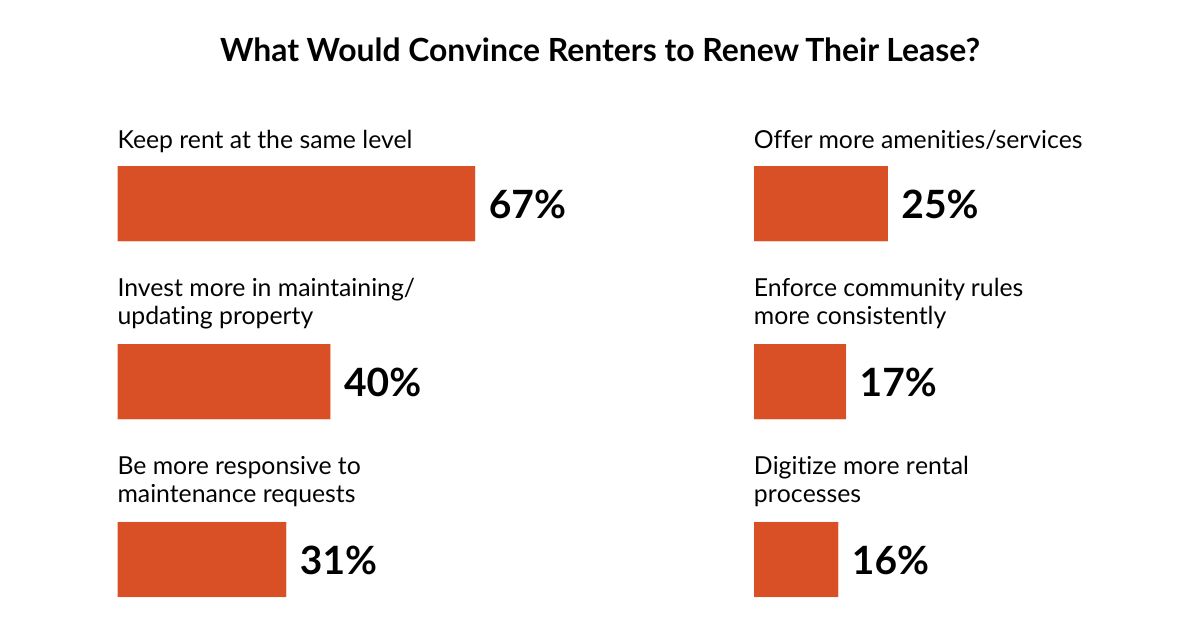
Tracking retention is one of the most critical metrics for a property management company because it directly impacts the bottom line – it’s far cheaper to keep a tenant than it is to acquire a new one.

TENANT RETENTION METRICS
This measures how well you are managing the day-to-day living experience. High tenant retention reduces turnover costs (cleaning, repairs, marketing) and vacancy loss.
Tenant Retention Rate (TRR): The percentage of tenants who choose to renew their lease at the end of their term.
Number of Renewals
TRR= ( ——————————————) x 100
Number of Expiring Leases
Average Lease Length: Track the total duration a tenant stays in a unit. If this number is increasing over time, your “stickiness” is improving.
Move-Out Reason Analysis: Categorize every move-out (e.g. job transfer, upsized/downsized, unhappy with maintenance, rent increase). This identifies if tenants are leaving due to factors that are within your control.
LEADING INDICATORS (The “Early Warning” System)
While the formulas above are “lagging” indicators (they tell you what already happened), these metrics can help you predict future retention:
Metric — Why It Matters
Maintenance Turnaround Time — Slow repairs are the #1 reason tenants leave.
Days on Market (DOM) — Long vacancies frustrate owners and lead to churn.
Rent Collection Rate — High delinquency leads to evictions, which destroys retention stats.
Response Time — How quickly your team responds to owner inquiries.
BEST PRACTICES FOR TRACKING
- Use a CRM/PMS: Modern property management software (like AppFolio, Buildium, or Yardi) usually has “Lease Renewal” and “Portfolio Health” reports built-in.
- Conduct Exit Interviews: Always ask both tenants and owners why they are leaving. A “Churn Log” can reveal patterns, such as a specific property manager who has higher-than-average turnover.
- Review Monthly: Retention isn’t a “once a year” checkup. Review these numbers monthly to catch service dips before they become a trend.
WHY ARE TENANTS REALLY LEAVING?
Recent surveys conducted by industry leaders like Buildium in partnership with NARPM (National Association of Residential Property Managers), as well as data from the National Apartment Association (NAA), highlight a significant disconnect between why property managers think tenants leave and why they actually do.
As of early 2026, the data shows that while property managers often attribute turnover to “life changes” (which are out of their control), where tenants actually cite preventable management issues much more frequently.
The Disconnect
According to the most recent industry reports, here’s how the perspectives differ:
What Property Managers Think VS What Tenants Actually Report
#1 Buying a home / Life milestones VS Rent is too expensive / poor value
#2 Job relocation VS Poor maintenance response
#3 Seeking a different neighborhood VS Security and Safety Concerns
Here’s the data:
1. Financial Pressure (32% – 35%)
Even in a stabilizing market, affordability remains the top driver. Interestingly, it isn’t always the rent amount itself, but the “Value Gap”—tenants are willing to pay more if they feel the service justifies it, but will leave if they feel they are overpaying for a neglected property.
2. Maintenance Issues (31%)
A massive 31% of tenants cite maintenance as their primary reason for leaving. Specific pain points include:
- Response Time: Taking more than 24–48 hours for non-emergency repairs.
- Communication: Not being kept in the loop on when a part is ordered or when a tech is coming.
- Quality: Having to call back multiple times for the same issue.
3. Homeownership (27% – 35%)
While this has historically been the #1 reason, the gap between renting and owning has widened. In 2025–2026, high interest rates and home prices have actually increased retention for many property managers because tenants “stay put” longer, but it remains a primary reason for those who do move.
4. Safety and Security
Security has climbed the list recently. Tenants frequently move due to:
- Broken locks or lack of exterior lighting.
- Package theft issues.
- Poor screening of neighbors (troublesome or “bad” neighbors).
ACTIONABLE TAKEAWAYS
The data suggests that 40% of uncertain tenants would stay if the property manager simply invested more in proactive maintenance.
- Proactive Tip: NARPM leaders now recommend moving from a “Break-Fix” model to a “Predictive Maintenance” model.
- Retention Hack: About 31% of “on-the-fence” tenants say they would renew if communication from their property manager improved, regardless of rent increases.